What Causes Melasma? A Singapore Guide to Triggers and Care
Quick answer: Melasma is a common skin condition that causes flat brown or grey-brown patches, usually on the cheeks, forehead, upper lip or nose. It has no single cause: it comes from a mix of sunlight, hormones and your genes, and heat or irritation can make it darker. It isn’t harmful or contagious, but it often comes back, so daily sun protection matters more than anything else.
If you’ve noticed brown patches on both cheeks that seem to get darker every time you’re out in the sun, you may be wondering whether it’s melasma, what caused it, and what you can do about it. This guide explains what melasma is, the triggers that make it darker in Singapore’s sun and heat, how to tell it apart from freckles and sun spots, and the daily habits that help.
What Is Melasma?
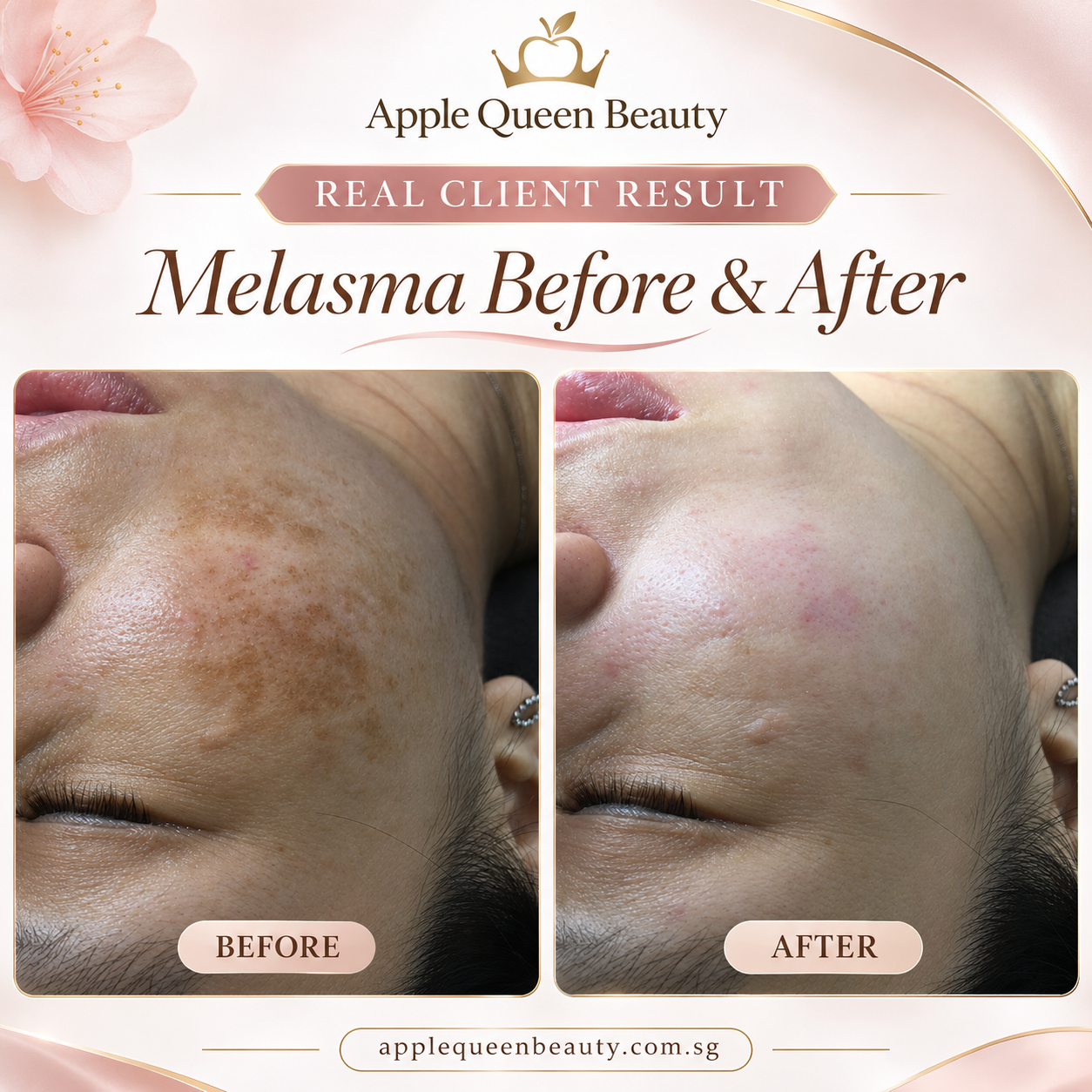
Melasma shows up as flat patches of brown or grey-brown skin. The patches aren’t raised and don’t itch, and their edges are usually soft and blurry rather than sharp.
- Where it appears: most often on both cheeks, the forehead, the upper lip, the bridge of the nose and the chin, and usually on both sides of the face in a matching pattern. It can also appear on the forearms and neck.
- Who gets it: it’s much more common in women, and it usually starts in adulthood, often in the 20s to 40s. It’s also more common in light-brown and brown skin tones, which includes many Asian skin types. Men can get it too.
- Other names: when it appears during pregnancy, doctors sometimes call it chloasma or “the mask of pregnancy”.
What Causes Melasma?
Melasma happens when the skin’s pigment cells become overactive and make too much pigment (melanin) in some areas. Doctors still don’t fully understand why this happens to some people and not others, but these triggers are well known:
- Sunlight. This is the biggest trigger. UV rays tell pigment cells to make more pigment, and visible light, the bright light you can see, can darken melasma too, especially in brown skin. In Singapore the UV index often reaches the “very high” or “extreme” range around midday all year round, so even a short walk to lunch adds up.
- Hormones. Pregnancy, the contraceptive pill and hormone therapy can all set it off. Melasma that starts during pregnancy sometimes fades after the baby is born, but not always.
- Your genes. Melasma often runs in families. If your mother or sister has it, you’re more likely to get it.
- Heat. For some people, heat alone makes melasma look darker, even without strong sun. Think saunas, hot yoga, long hot showers or cooking over a hot stove.
- Irritation. Anything that inflames the skin can leave more pigment behind: harsh scrubs, picking, strong DIY peels, waxing the face, or products that sting.
- Some medicines and products. Certain medicines and scented products make skin more sensitive to light. If you notice new patches after starting something new, ask your doctor or pharmacist.
Melasma, Freckles or Sun Spots?
Brown marks on the face often look alike, and many people have more than one kind. This is how they usually differ:
| Type | What it usually looks like | Good to know |
|---|---|---|
| Melasma | Larger flat patches with soft edges, often matching on both cheeks | Linked to sun, heat and hormones; tends to come back |
| Freckles | Small light-brown dots, often there since childhood | Darken in the sun and fade a little out of it |
| Sun spots | Flat brown spots with clearer edges on skin that gets the most sun | Usually appear from your 30s or 40s; doctors call them solar lentigines |
| Post-acne marks | Flat brown or pinkish marks where a pimple or irritation has healed | Usually fade slowly on their own over months |
Only a doctor can tell you for sure which one you have. For spots and general uneven tone, see our Pigmentation Facial.
Does Melasma Go Away?
Sometimes. Melasma linked to pregnancy or the pill may fade over the months after the baby is born or after you stop the pill (talk to your doctor before changing any medicine). For many people, though, it lasts for years. It gets lighter with good sun protection and darker again after a lot of sun, and even when a doctor’s treatment lightens it, it often comes back. It helps to think of melasma as something you manage day to day, rather than something you fix once.
How to Keep Melasma From Getting Darker
- Wear sunscreen every morning, even indoors and on cloudy days. Choose a broad-spectrum SPF 30 or higher (SPF 50 is a good choice for melasma) and use enough: about two finger-lengths for your face and neck. Reapply every two to three hours outdoors, and after sweating.
- Pick a tinted sunscreen. Tinted sunscreens made with iron oxides also help block visible light, which clear sunscreens don’t cover as well.
- Add shade. A wide-brimmed hat, an umbrella and sunglasses help, especially from late morning to mid-afternoon. At work, sit away from bright windows if you can.
- Keep your face cool. If saunas, hot yoga or hot showers make your patches look darker, cut back, and wash your face with lukewarm water.
- Be gentle with your skin. Use a mild cleanser and a moisturiser, skip scrubs and picking, and patch-test new products on a small area first.
- Look for brightening skincare. Products with niacinamide, vitamin C, azelaic acid or tranexamic acid can help uneven tone look more even over time. Give a product at least two to three months before you judge it.
- Be careful with “whitening” creams sold online. Singapore’s Health Sciences Authority (HSA) has found mercury and hydroquinone in some of them, and both can harm your skin and health. Hydroquinone is a medicine here and should only be used with a doctor’s advice.
Can a Facial Help With Melasma?
An honest answer: a facial can’t cure melasma or get rid of it. Melasma comes from the pigment cells in your skin, and only a doctor can diagnose and treat it.
What a gentle facial can do is help your skin look brighter, more even and refreshed, keep it calm and hydrated, and give you a routine and sun-protection habits that stop the patches getting darker. It works best alongside daily sunscreen and any treatment your doctor recommends.
The wrong facial can make melasma look worse. Hot steam, harsh scrubbing, strong peels and heavy-handed extraction over the patches can all irritate the skin and leave more pigment behind. If you have melasma, tell your therapist, and ask what they’ll use on your skin.
That’s why our Facial for Melasma-Prone Skin is gentle by design: a look at your skin, a mild cleanse with no harsh scrubbing, brightening care with a cooling mask, and sunscreen to finish.
Before and After: One Client’s Cheeks
Uneven tone and brown spots on both cheeks, before and after 4 facials at our salon.
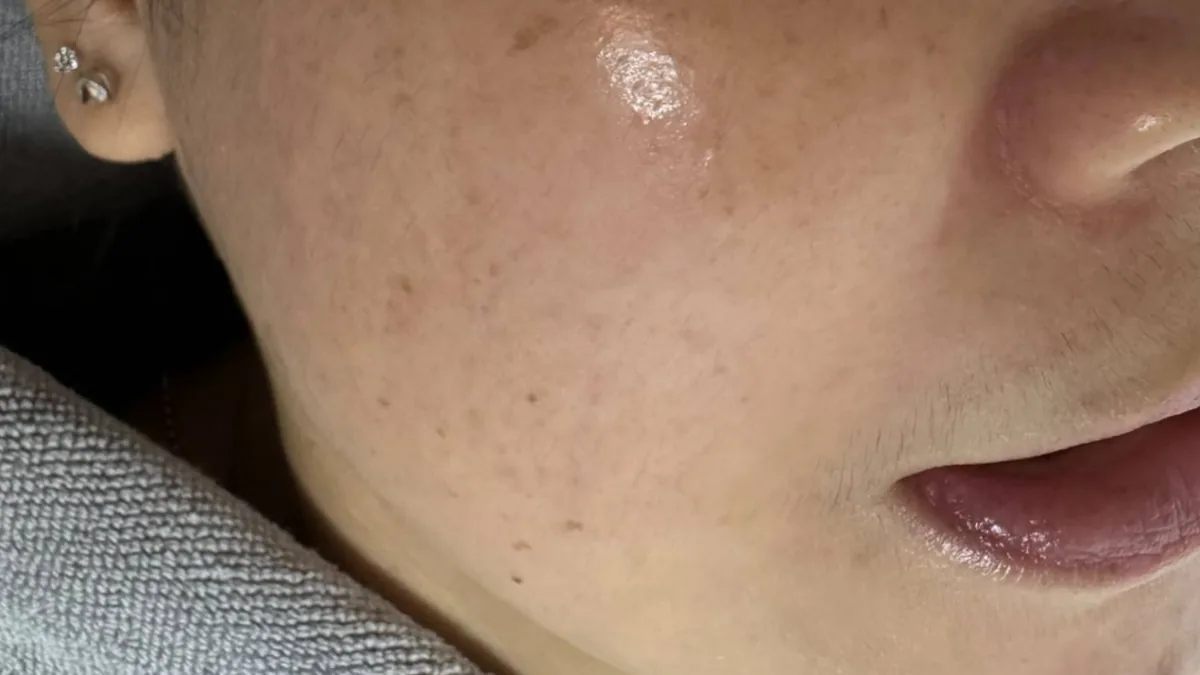
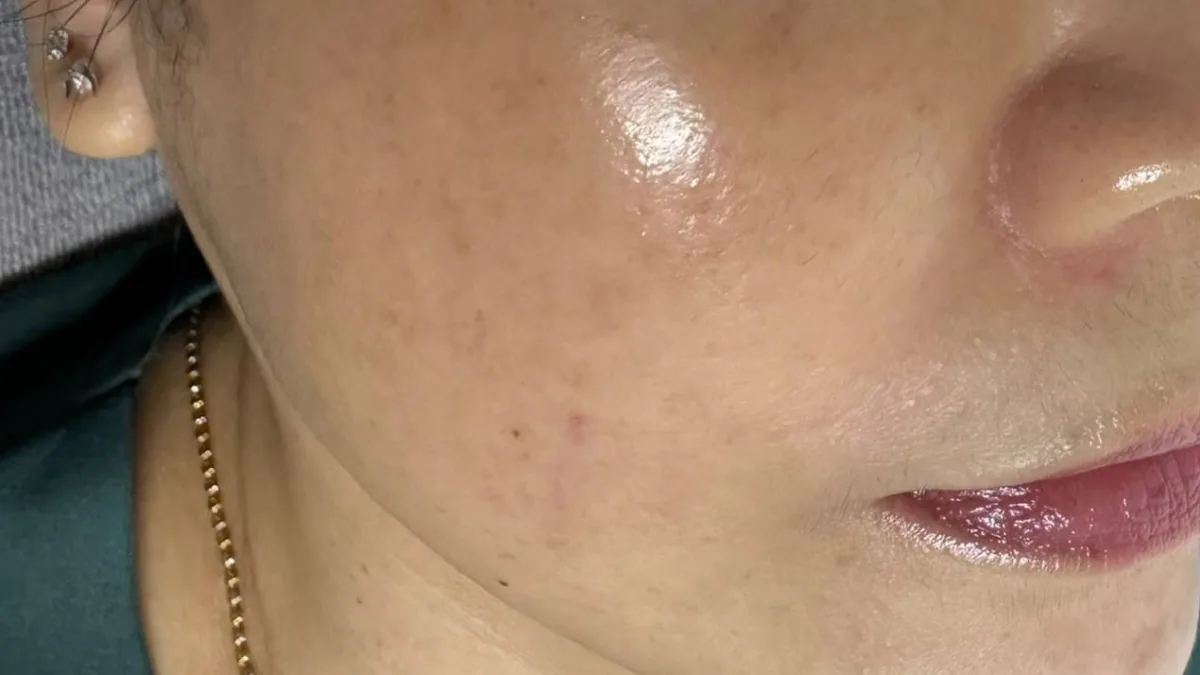
Right cheek
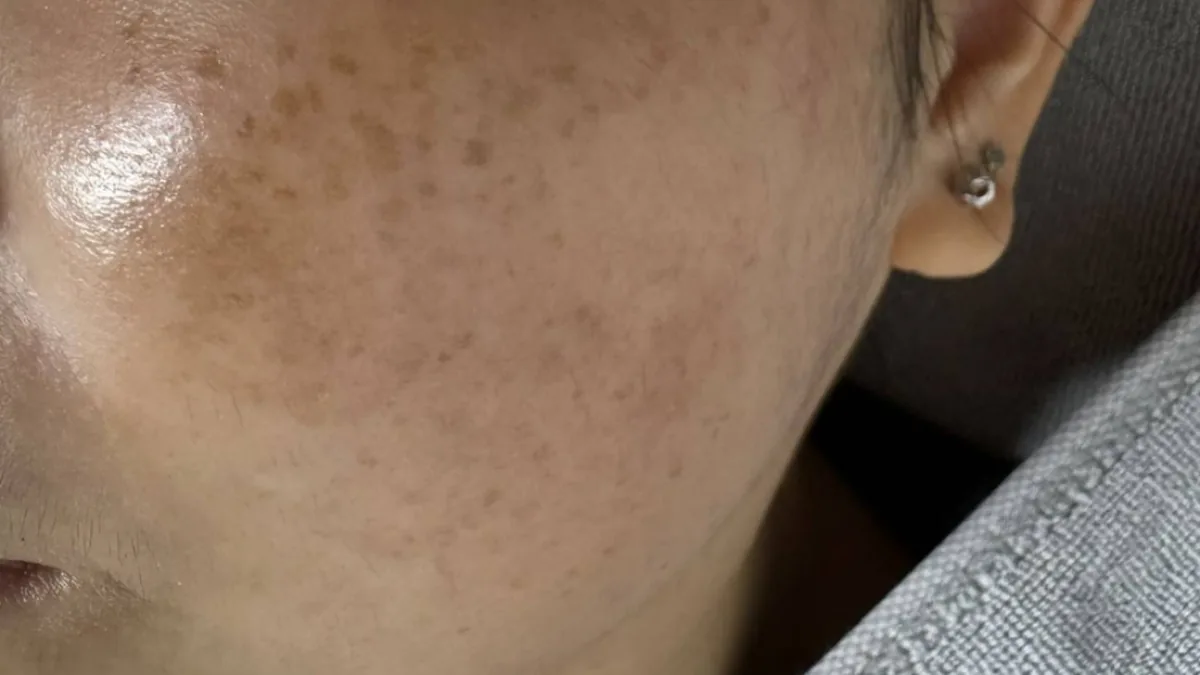
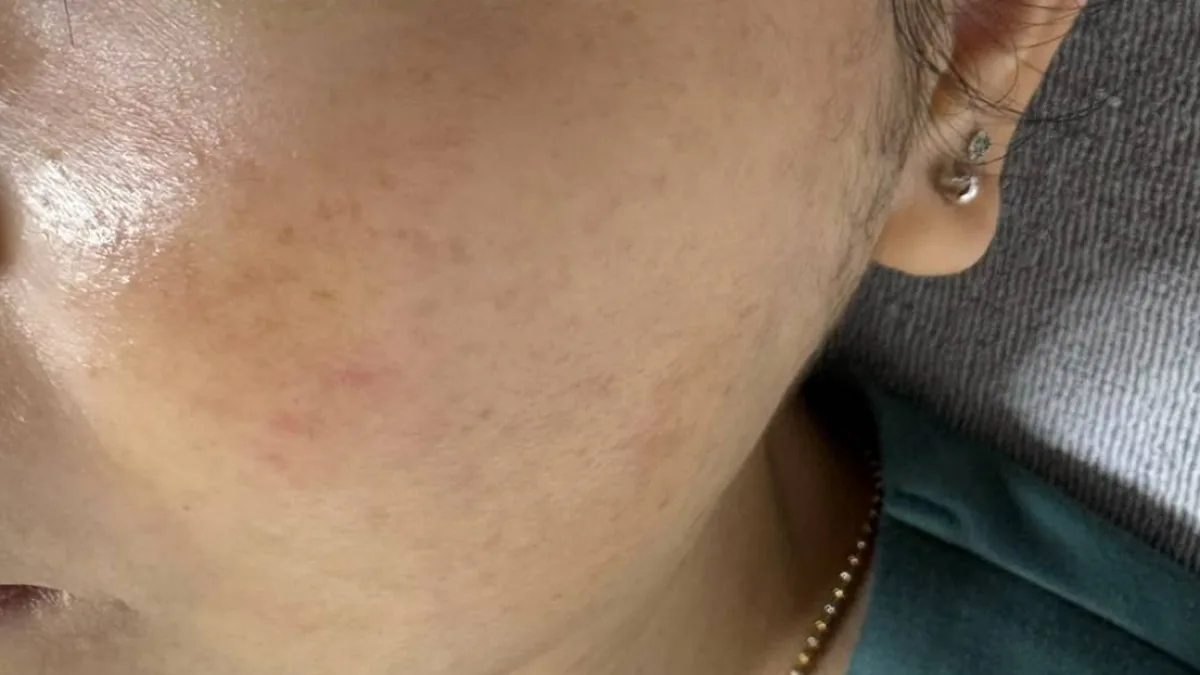
Left cheek
Same client, photographed before her first session and after her fourth, with one session every 3 weeks. Each pair shows the same area of her cheek: the photos are only cropped, turned upright and scaled to match, with no retouching or filters. Results vary from person to person, and spots can darken again with sun exposure.
When Should You See a Doctor?
Please see a doctor (a GP or a dermatologist) if:
- you’re not sure whether your patches are melasma
- a spot is new, growing, raised, itchy, bleeding or changing colour
- you’re pregnant or breastfeeding and want to know which products are safe
- you’d like prescription creams or other medical treatment for melasma
A GP or polyclinic doctor can refer you to a dermatologist, for example at the National Skin Centre.
Melasma Questions We Often Hear
Is melasma permanent?
It can last a long time and tends to come back, but it often gets lighter with steady sun protection and, if you need it, treatment from a doctor.
Is melasma contagious?
No. It isn’t an infection, and it can’t spread from person to person.
Why does my melasma look darker after a holiday?
More sun and more heat. Beach days, poolside lunches and long walks in the sun all add up. Reapply sunscreen often while you’re away, and wear a hat.
Can I have a facial if I’m pregnant and have melasma?
Usually yes, as long as it’s gentle. Tell your therapist you’re pregnant, and check with your doctor before using any lightening product.
Visit Us at International Plaza
Not sure what your brown patches are, or what your skin needs? Visit us at 10 Anson Road, #02-69 International Plaza, a short walk from Tanjong Pagar MRT, or WhatsApp us. We’ll tell you honestly what a facial can and can’t do for your skin.
This article is general information, not medical advice. If you’re unsure about a spot on your skin, please see a doctor.
27 Nov 2026